One year. Thousands of dollars in and out of the same PayPal account. A handful of cuts on my hands, more sweat than I’d like to admit in a closet that was never meant to hold a server rack — and at least one night where I gave my AI agent a sloppy instruction and watched it confidently undo three days of work in the time it takes to make coffee.
It’s done. The rebuild is complete.
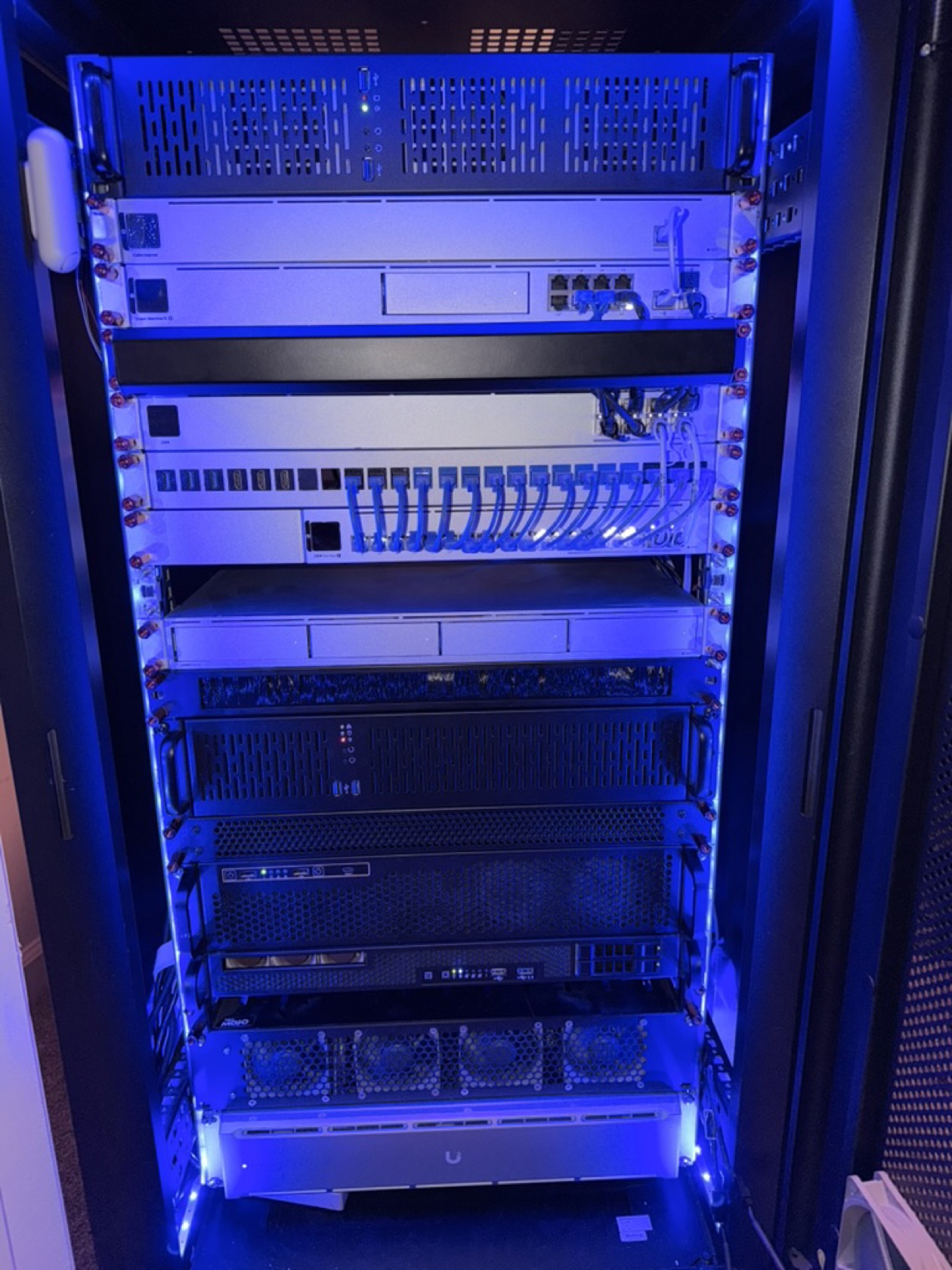
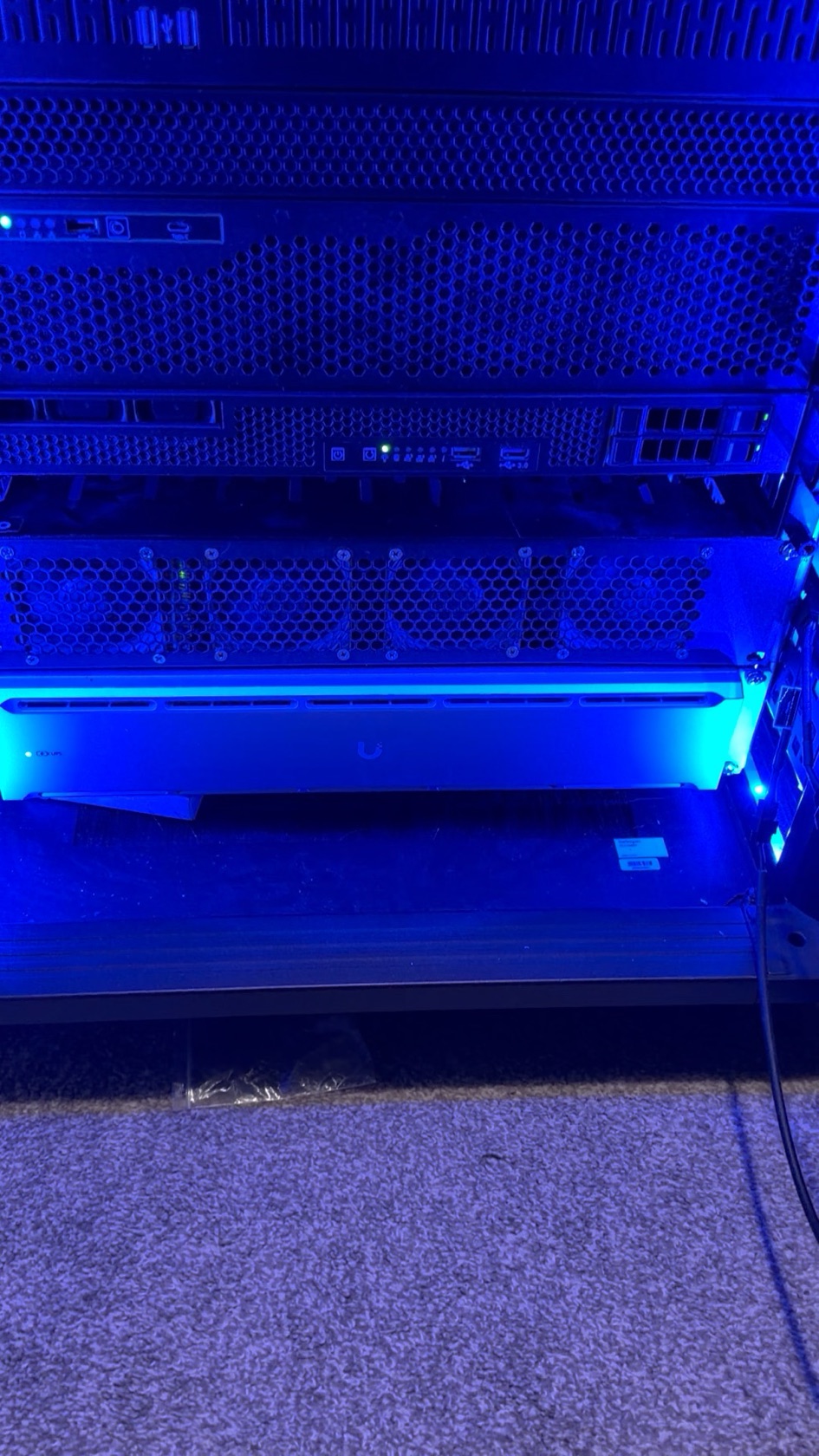
What’s in that cabinet now is not a pile of hobby gear. It’s a 3-node OpenShift control plane plus a GPU worker, backed by Ceph for storage, running a GitOps-driven platform with real observability and a private, self-hosted LLM — 72 cores / 144 threads and 768 GB of ECC memory all told. It is, for all intents and purposes, a miniature version of the exact systems I want to help run at scale.
Here’s how it came together, and what it cost me to get here.
Giving enterprise hardware a second life #
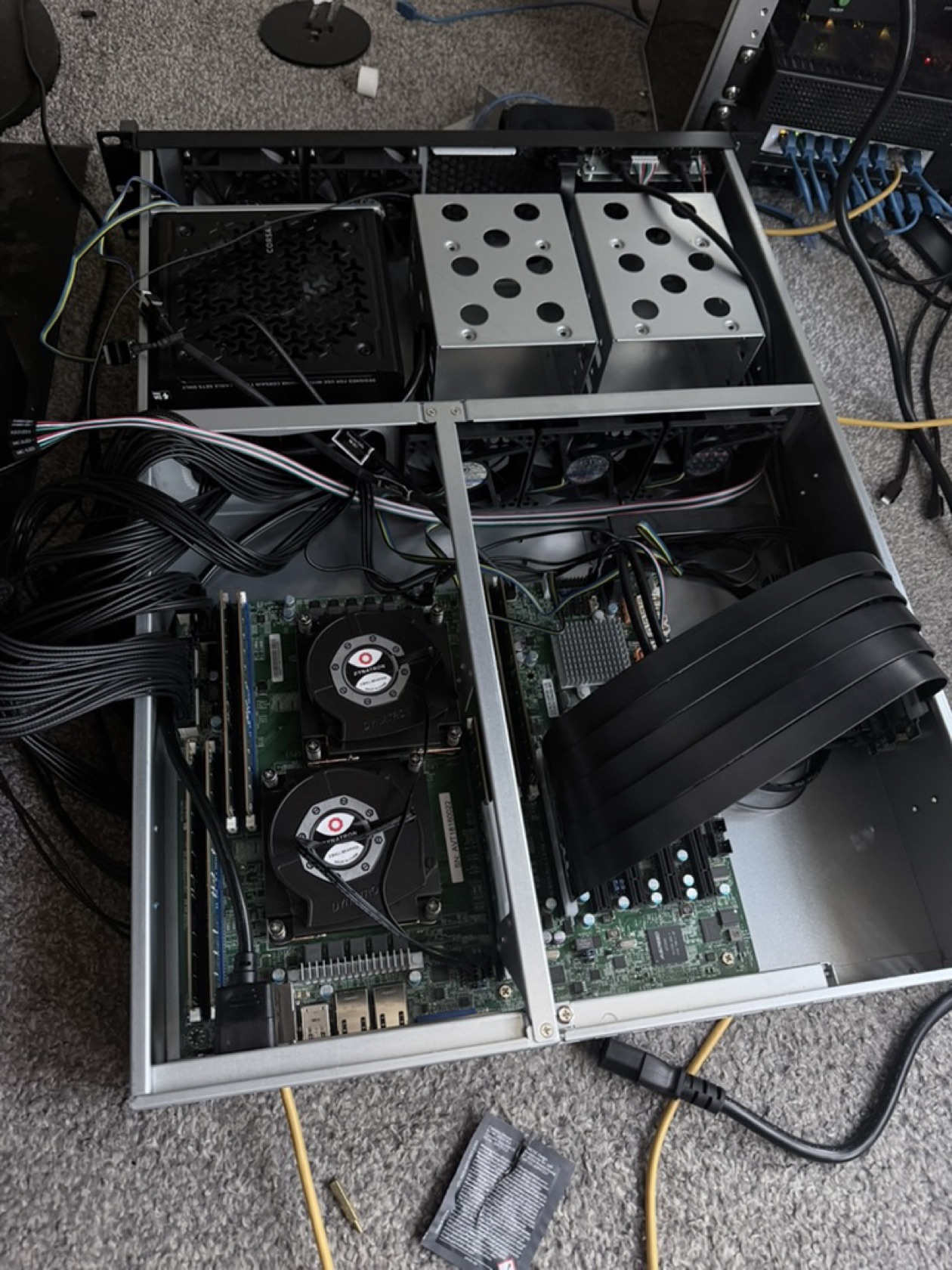
This didn’t start with a shopping cart. It started with patience and a lot of lost eBay auctions. I sold old gear to fund new gear, won some auctions, lost more, and gave a small fleet of retired enterprise servers a second home:
- 2× Supermicro X10DRL-i — dual Xeon E5-2630L v4, 256 GB DDR4 ECC each
- 2× Supermicro X10SDV-16C-TLN SoC boards — 128 GB DDR4 ECC each
- 4× 500 GB SSDs — one per node, pooled into Ceph
- 1× NVIDIA A2 16 GB accelerator for the AI workloads
The platform #
On top of that hardware sits the part that actually matters: a platform that behaves like one. OpenShift on RHEL CoreOS, Ceph/ODF for block, file and object storage, ArgoCD driving everything from Git, and a full VictoriaMetrics + Grafana observability stack watching all of it. On the AI side: vLLM serving the model, with LiteLLM, OpenWebUI, Qdrant and CloudNativePG rounding out a private AI platform that never sends a token to anyone else’s cloud.
The cooling system I couldn’t buy, so I built #
Here’s the part I’m proudest of.
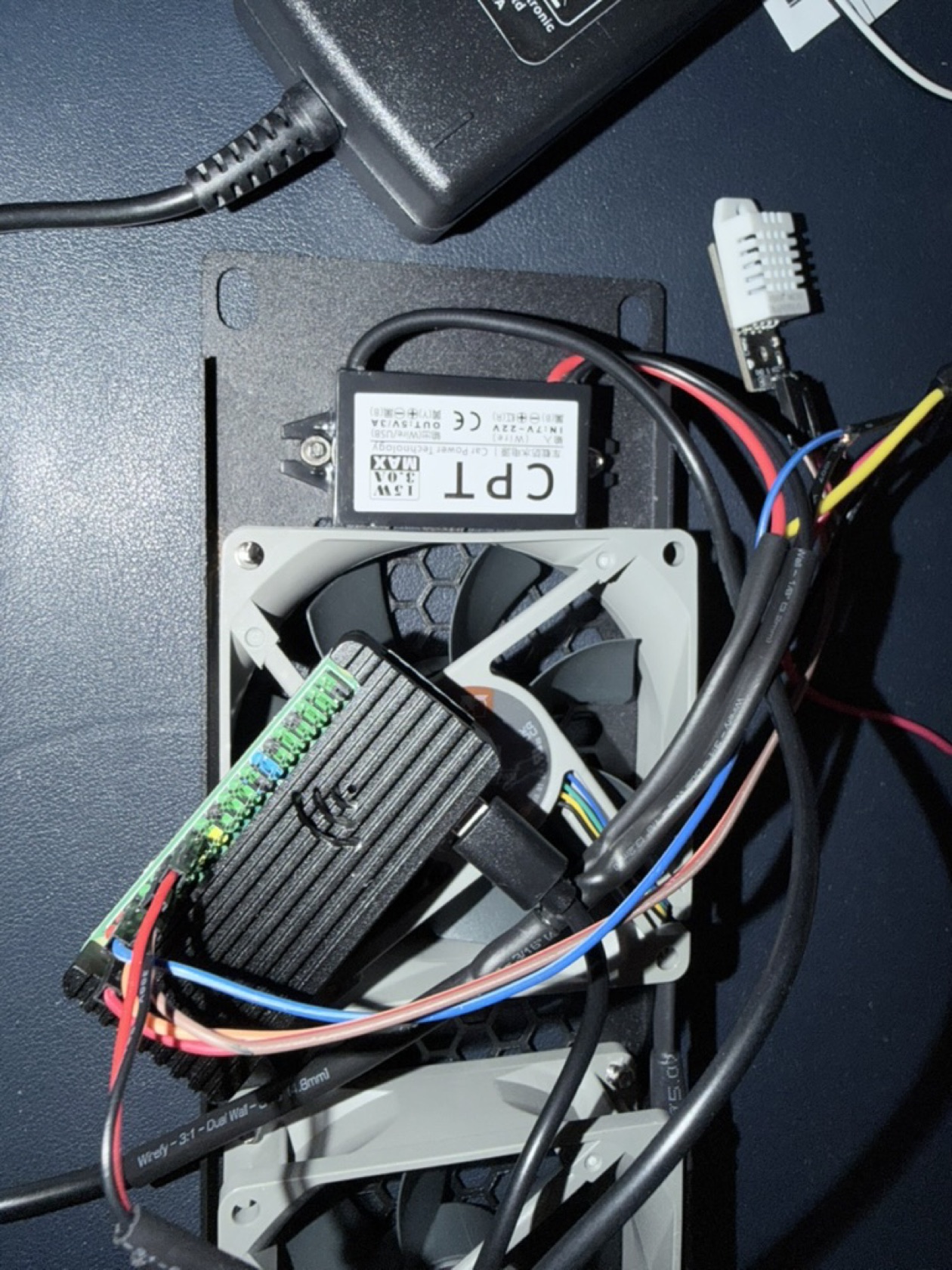
A sealed rack in a closet gets hot, fast. I went looking for a controller that could do two simple things: drive the fans off actual temperature and humidity, and hand me metrics I could graph next to the rest of my cluster. Nothing off the shelf did both. So I built it.
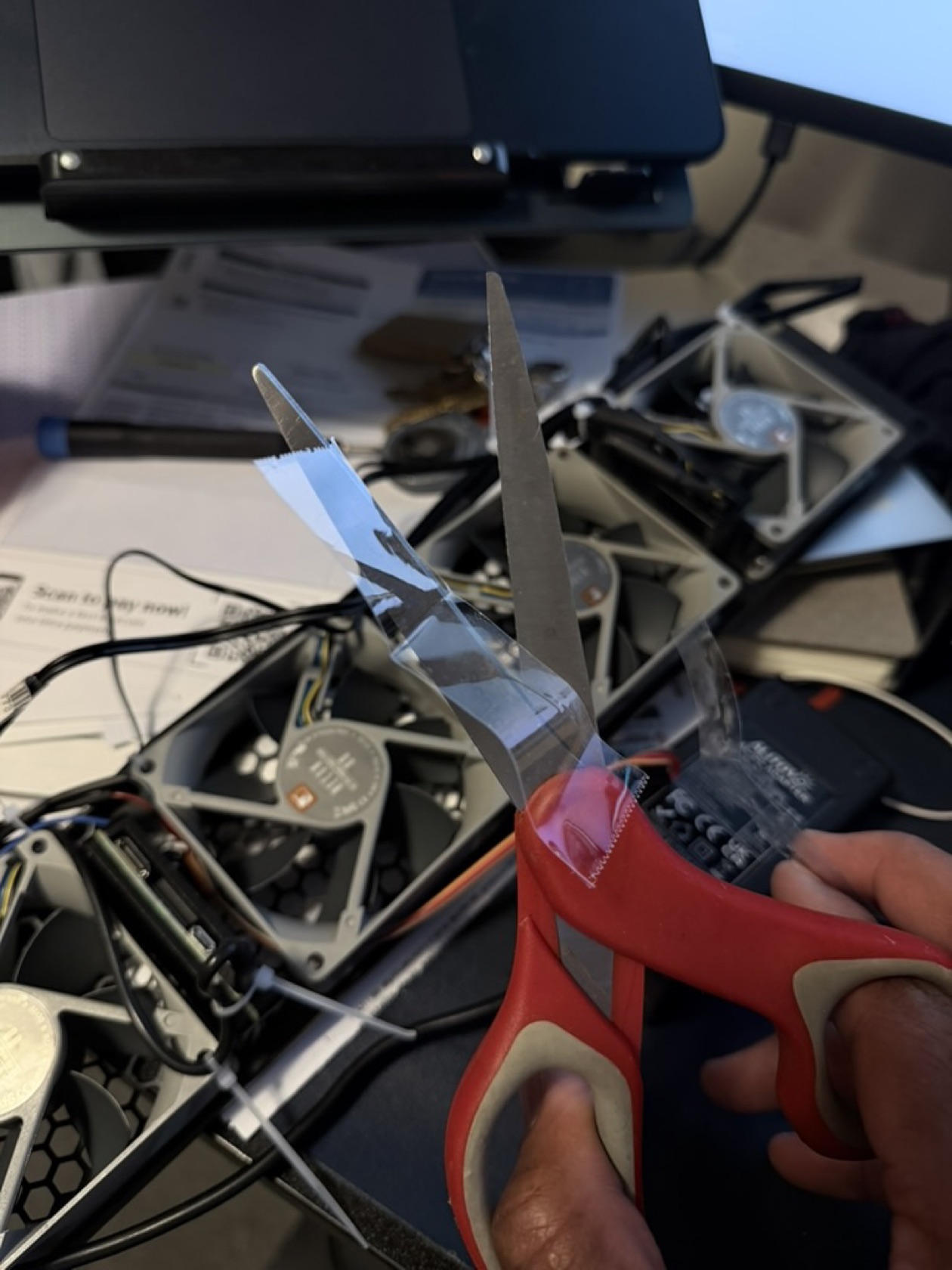
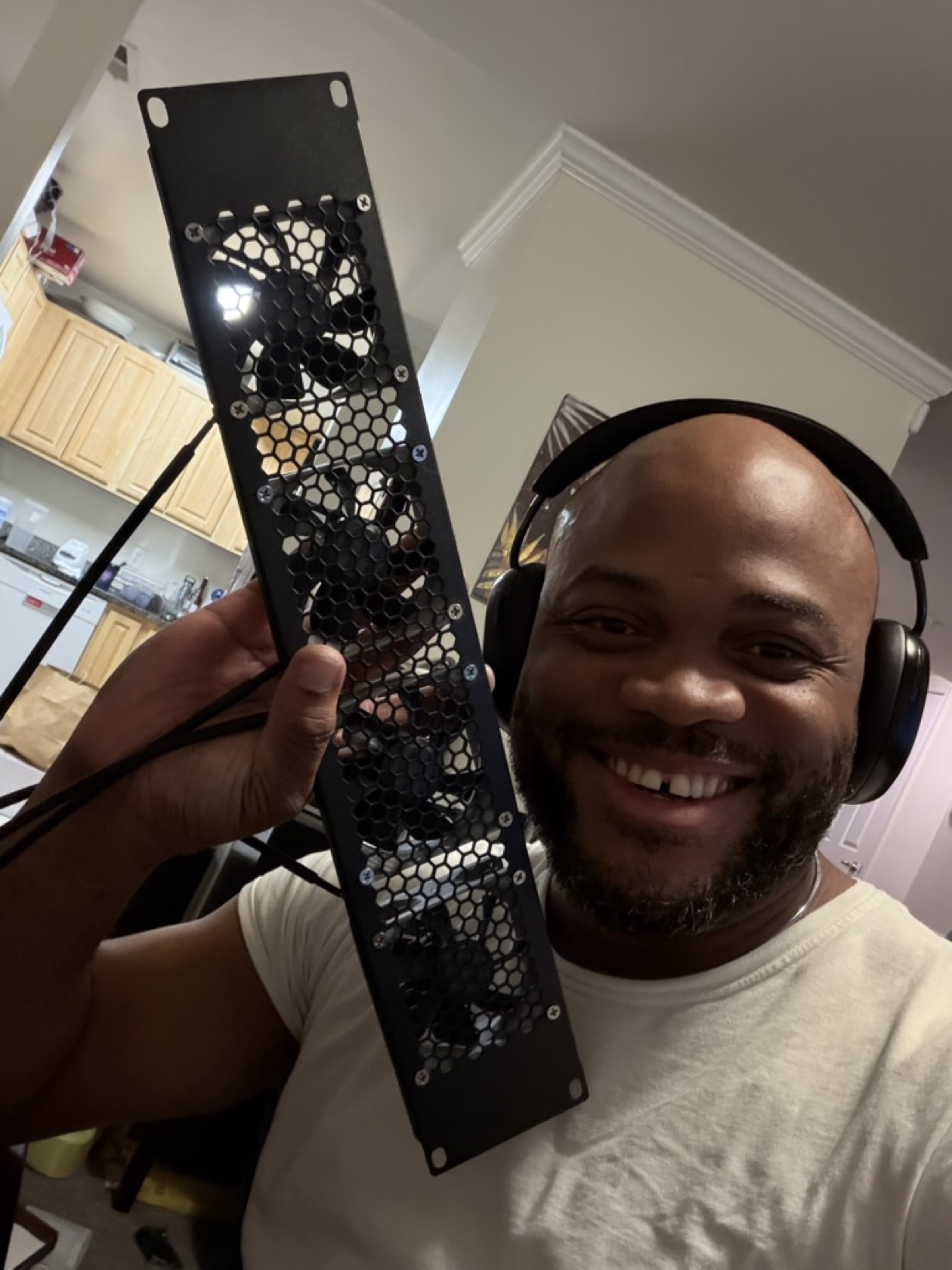
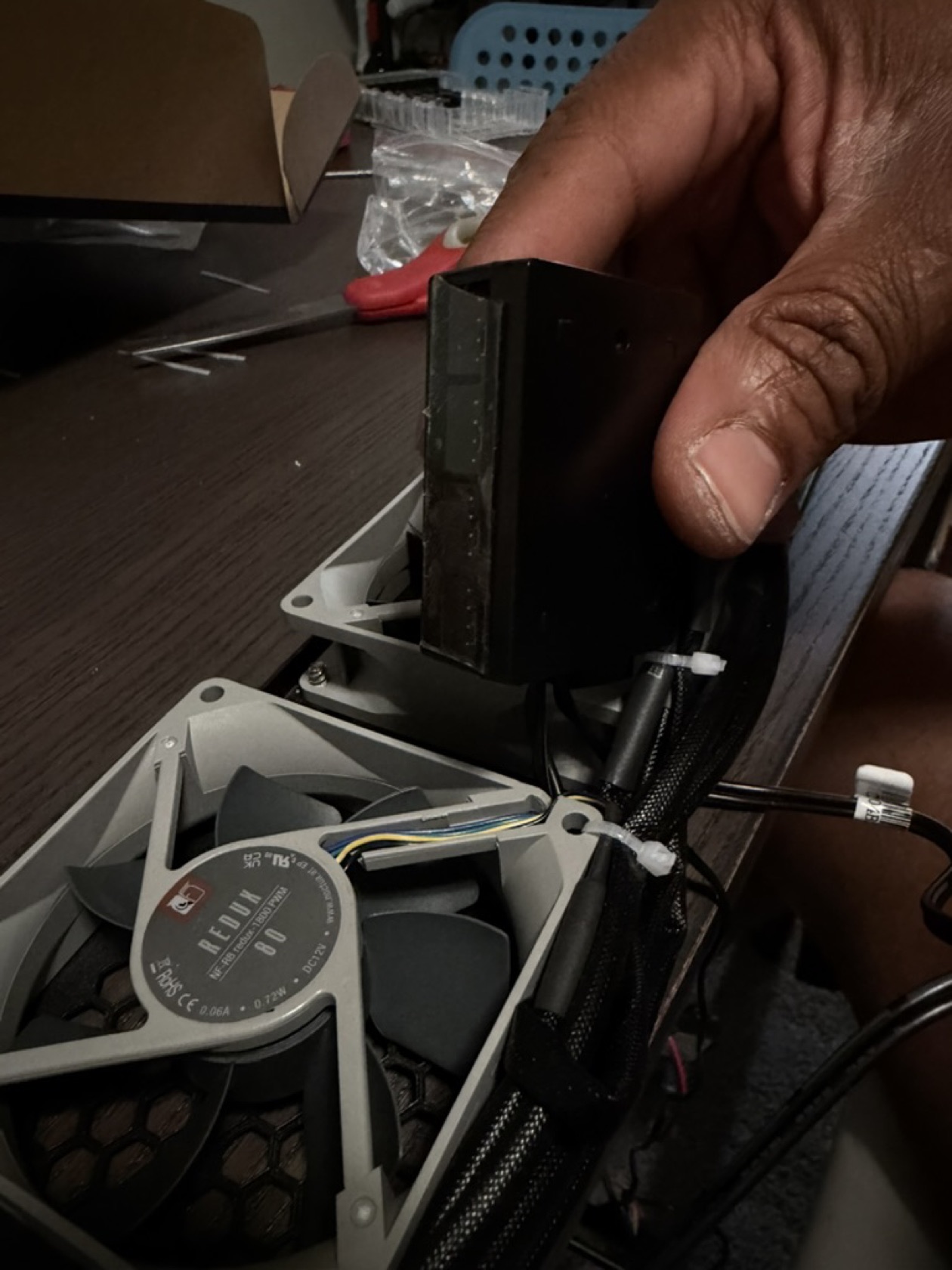
The brain is a Raspberry Pi Zero running a small Python service. It reads a pair of AM2302 / SHT30 temperature-and-humidity sensors, runs the fan curves, and drives a bank of PWM fans mounted on a custom 2U hex-mesh panel I fabricated to fit the rack. Power comes off a 12 V→5 V step-down converter, the sensor runs are made from thermostat wire, and yes — I sat there placing pull-up resistors by hand.
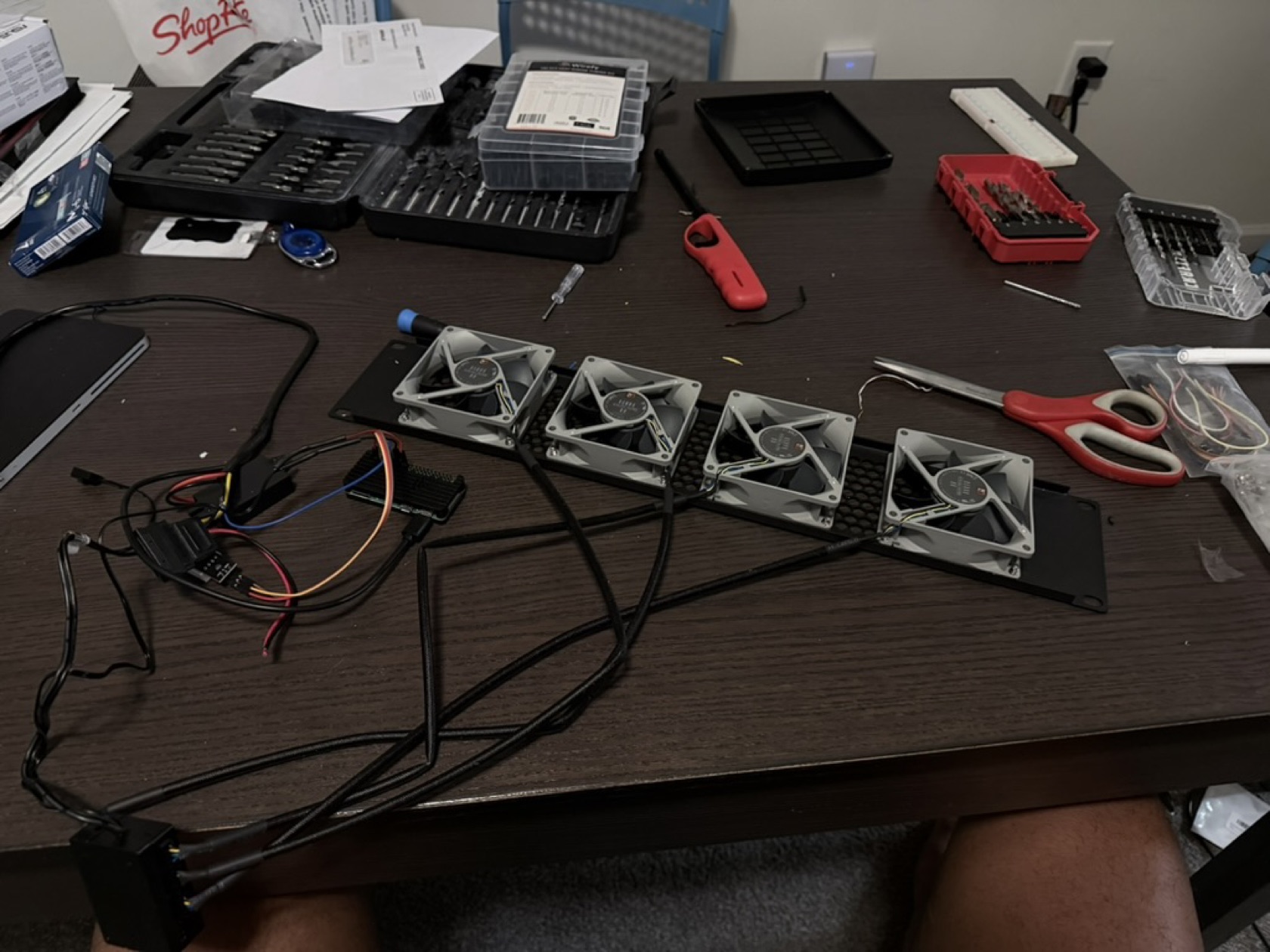
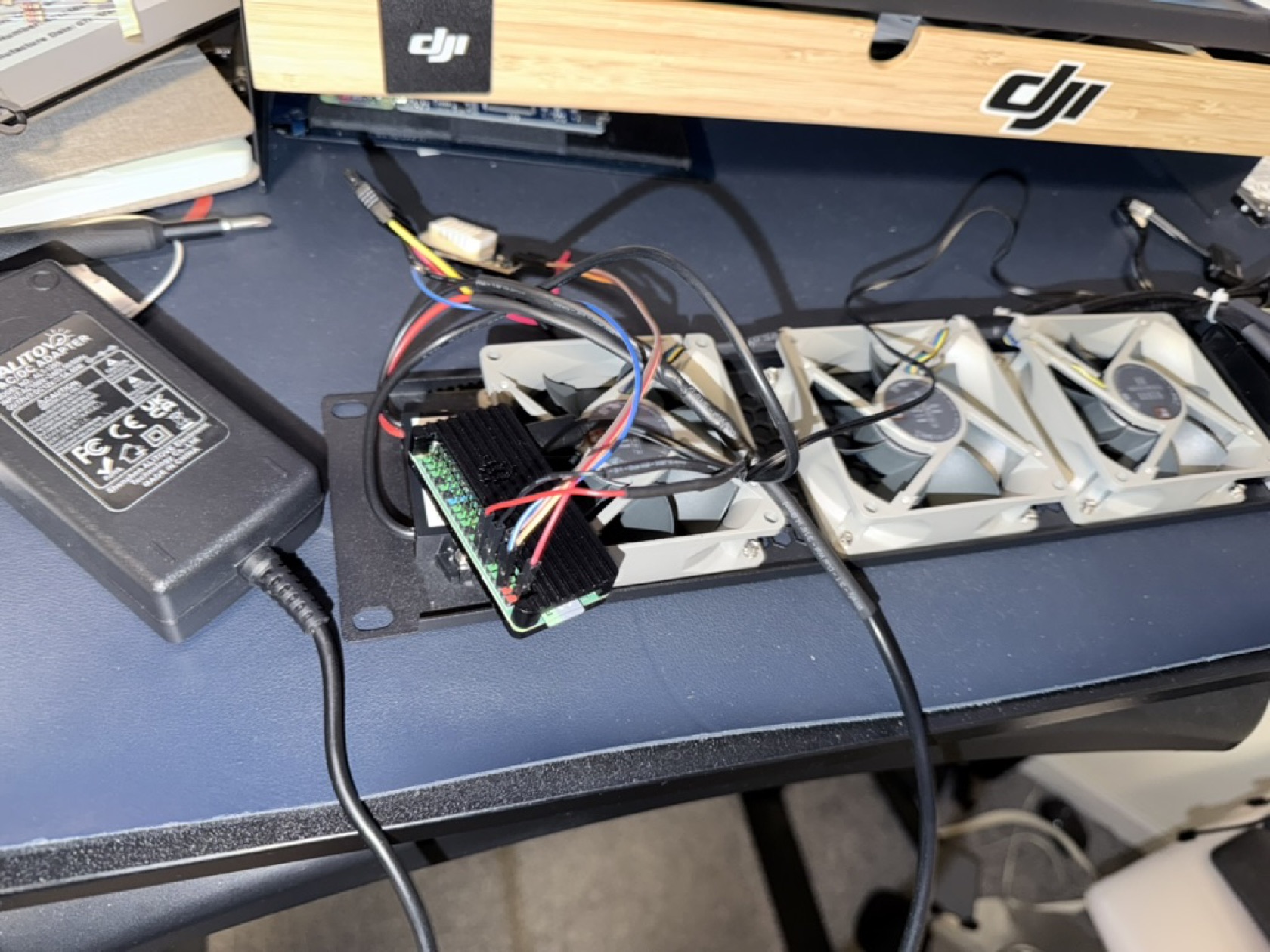
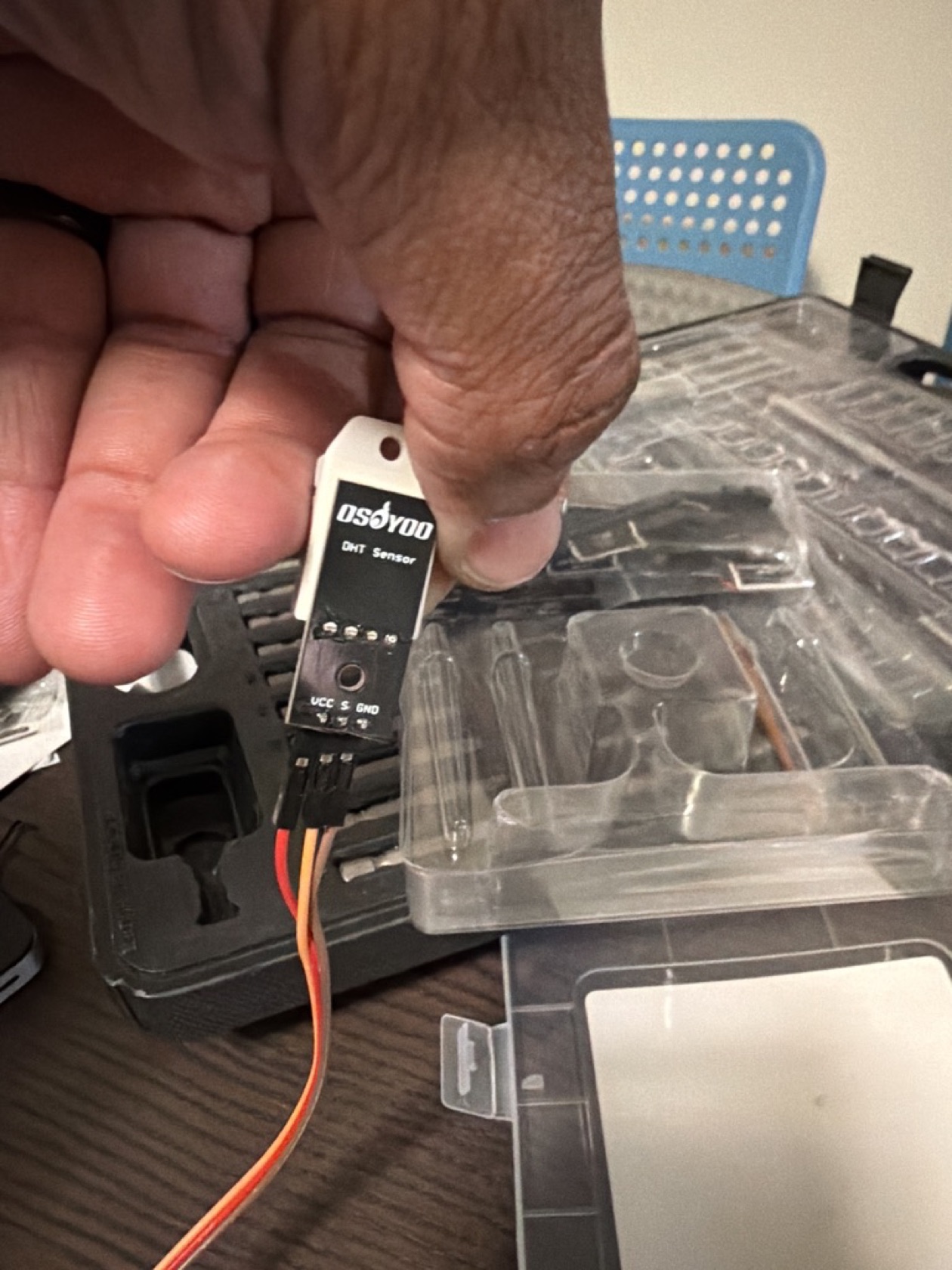
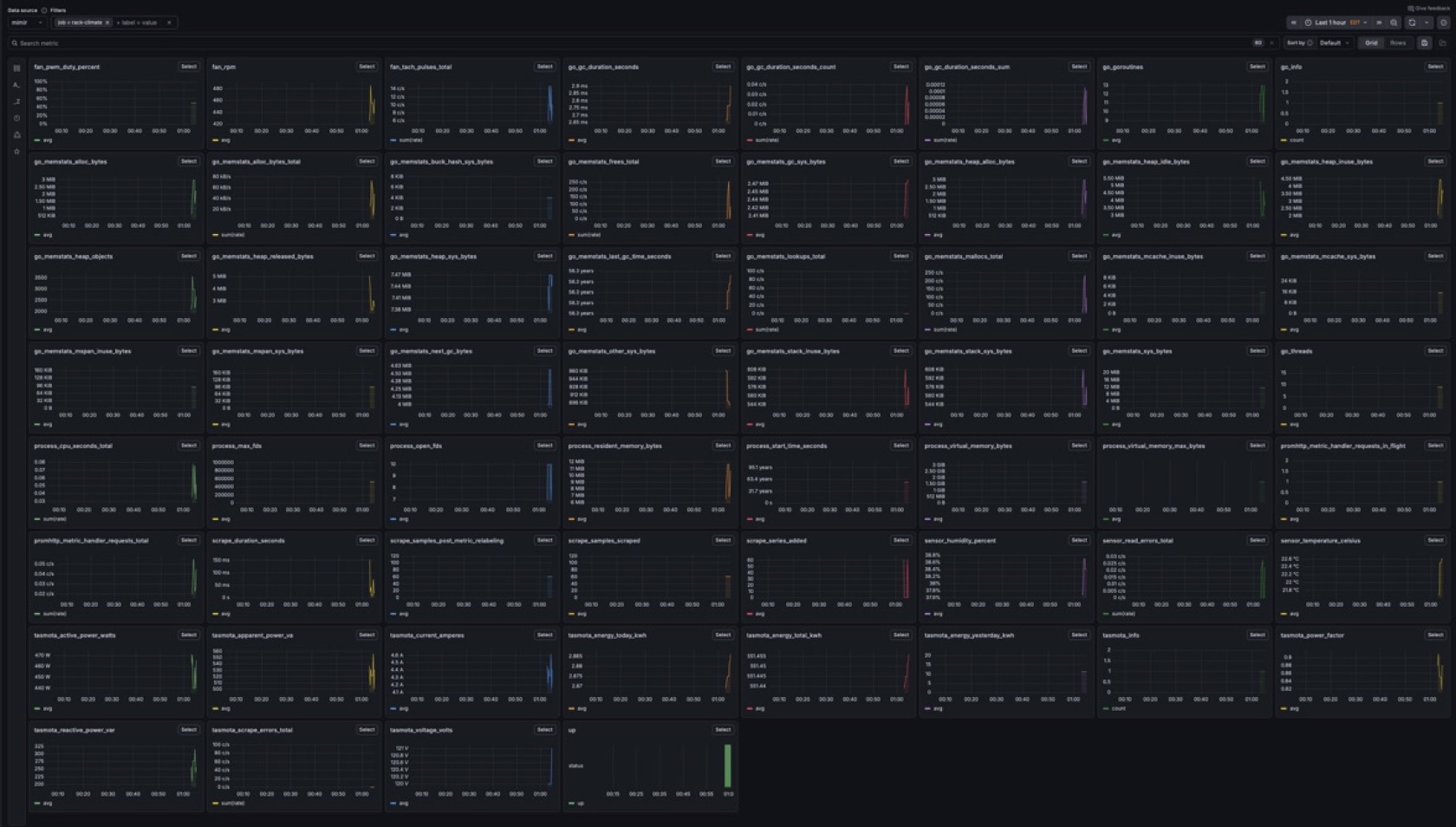
The Python service doesn’t just spin fans — it exposes Prometheus metrics, so the rack’s thermals land on the same Grafana dashboards as everything else. When the closet warms up, I can see it.
The blood part isn’t a figure of speech, by the way.
The AI chapter — the wonder and the cliff #
The A2 earns its slot. Serving a local model with vLLM, I benchmarked how latency scales with context length, and the shape of the curve tells its own story:
| Prompt size | Total tokens | Elapsed | | — | — :| — :| | 8k | 8,041 | 0.19s | | 16k | 16,041 | 0.17s | | 24k | 24,041 | 0.22s | | 32k | 32,041 | 0.30s | | 40k | 40,041 | 0.41s | | 48k | 48,041 | 88.08s | | 56k | 56,041 | 23.34s | | 64k | 64,041 | 26.17s | | 96k | 96,041 | 36.70s | | 112k | 112,041 | 41.89s |
Butter-smooth to 40k, a brutal cliff at 48k when it blows past the KV-cache budget
and starts paging, then a new, higher baseline once it settles. That single row —
48k → 88 seconds — taught me more about GPU memory, batching and serving limits
than any blog post could. That’s the ups and downs of AI in one table.
What a year of this actually taught me #
The hardware was the easy part. The lessons were the point:
- Ceph taught me patience. OSD recoveries,
nooutflags, mon quorum, watchingHEALTH_WARNcrawl back to clean at 24 MiB/s. You do not rush storage. - Kubernetes taught me humility. Every clever shortcut had a receipt attached, usually payable at 2 a.m.
- AI taught me both. The wonder of a model running entirely on hardware I own — and the day it wiped days of work because I gave it a bad instruction. The human stays in the loop. Guardrails aren’t optional. That was the tears.
- And quietly, running all of it end to end taught me leadership: how to prioritize when everything is on fire, how to communicate a failure, and when to stop and think instead of typing.
Why I’m sharing this #
I didn’t wait for a ticket to learn any of this. I bought the hardware, ran the cables, wrote the Python, broke it, fixed it, and shipped it — because that’s how I learn best: hands-on, end to end, until it actually works.
What’s sitting in my closet is a private cloud: Ceph-backed storage, GitOps, first-class observability, a home-grown control loop, and a private AI platform. It’s the same shape as the large-scale infrastructure I want to help build and keep running — just smaller, and paid for with my own hands.